


As of April 2026, the slot has officially transcended its identity as a mere game of chance. It has become a sophisticated pillar of “CreaTech”—a fusion of creative storytelling and high-end technology. In a world where digital entertainment is increasingly decentralized and personalized, the slot is now an interactive ecosystem where transparency is guaranteed by the blockchain and immersion is driven by Artificial Intelligence.
The “Provably Fair” Standard: Beyond the Black Box
The biggest technological shift this year is the move away from “black-box” Random Number Generators (RNG). In 2026, the industry has standardized Provably Fair Technology. By utilizing cryptographic hashes on a public blockchain, players no longer have to take a casino’s word for it; they can verify every single spin themselves.
This transparency is the engine behind a massive 240% surge in cryptocurrency-integrated gaming. With the rise of Smart Contract-based prize distribution, the concept of “waiting for a withdrawal” is becoming a relic of the past. Winnings are now settled instantly, moving from the game’s logic directly to a user’s digital wallet in milliseconds.
AI as an Active Participant: The Rise of Autonomous Agents
Artificial Intelligence in 2026 is no longer just a backend tool for suggesting games—it has become a participant. One of the most groundbreaking trends this year is the emergence of AI-Agent gameplay.
In some decentralized platforms, users no longer pull the virtual lever themselves. Instead, they stake assets on Autonomous AI Agents. These agents possess:
- Persistent Identities: Each agent has a history and a unique “playing style” recorded on-chain.
- Learning Loops: The agents adapt their strategies based on the game’s volatility and historical patterns.
- Economic Agency: These agents act as independent economic actors, allowing for a new layer of “Managerial Gaming” where the user acts as a coach rather than a player.
Cinematic Storytelling: The Death of the “Static” Reel
The aesthetic of the 2026 slot is defined by Immersive Storytelling. Leading developers have moved away from the repetitive “spin-win-repeat” cycle in favor of narrative-driven progress.
- Chapter-Based Unlocks: Players progress through multi-chapter adventures, where spinning the reels unlocks new parts of a story, character development, and cinematic cutscenes that rival Hollywood productions.
- Atmospheric Design: The trend has shifted toward “Mood-First” visuals. Instead of overwhelming players with flashing lights, 2026’s top titles feature neon-lit “Chill Cyberpunk” or high-definition nature themes that prioritize clarity and pacing.
The Hardware Edge: J-Curve Screens and WebXR
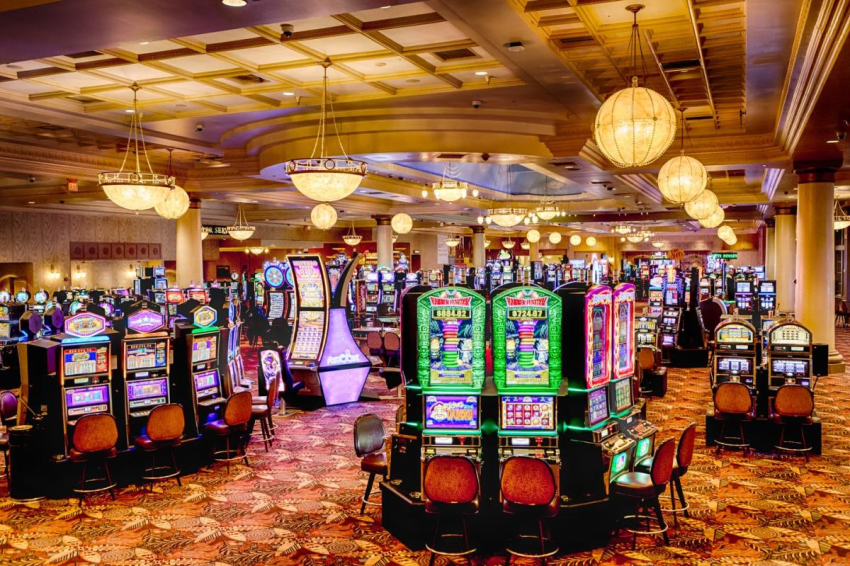
On the physical side, the 2026 casino floor is dominated by the J-Curve Portrait Screen. These displays are designed to match the natural curvature of the human eye, providing a 4K field of view that pulls the player into the game world.
For the mobile-first majority, WebXR has removed the need for bulky apps. Players can now walk through virtual 3D lobbies and interact with other users in real-time, all through a standard mobile browser. This “Metaverse” approach to slots ensures that the social element of a physical casino is preserved, even in a digital-only environment.
Conclusion: A Modular Future
The slot in 2026 is a masterclass in modularity. It is a world where Stablecoins (USDT/USDC) have surpassed traditional payment methods, where AI personalizes the difficulty in real-time to prevent player burnout, and where every win is a verifiable data point on a global ledger. As we look forward, the “slot” will continue to evolve not just as a gambling product, but as a primary training ground for how humans and AI interact within the digital economy.